
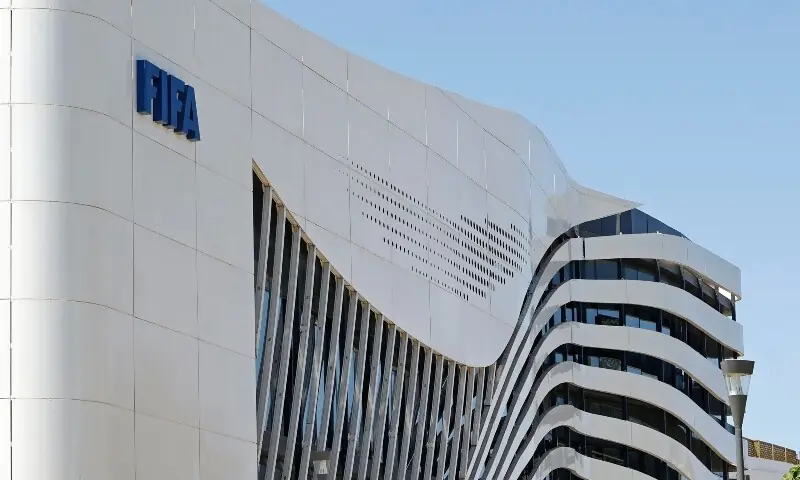
FIFA President Gianni Infantino likely anticipated a return to normalcy following the suspension of his contentious proposal to permit private investment in the World Cup. However, the fallout has been quite the opposite, leaving his leadership in jeopardy. Infantino, who is 56 years old and hails from Switzerland, previously seemed poised for a smooth re-election for a fourth and final term scheduled for March 2023. Now, his future appears uncertain.
Last Saturday, Infantino publicly acknowledged the backlash against his proposal, stating, "Our purpose has always been — and will always be — to unite and improve. As a result, this proposal will not proceed." This admission has led to a wave of criticism from various football governing bodies, highlighting a significant loss of confidence in FIFA's leadership.
UEFA, the governing body for European football, expressed relief at the withdrawal of the plan but indicated that it is contemplating legal action. In a letter sent by its lawyer in the United States, UEFA described the proposal as a "shabby, back room, opaque deal" that contradicted Infantino's promises of transparency made during his election campaign in 2016. The organization has criticized the lack of consultation and the unilateral nature of the decision-making process.
Furthermore, CONCACAF, which oversees football in North and Central America and includes the co-hosts of the 2026 World Cup—Canada, Mexico, and the United States—has also condemned Infantino's actions. Their president, Victor Montagliani, is seen as a potential challenger to Infantino's leadership, emphasizing the need for a thorough evaluation of FIFA's governance. He stated, "A comprehensive reckoning with this presidency is imperative."
Shaikh Salman bin Ebrahim Al Khalifa, president of the Asian Football Confederation (AFC) and a former rival of Infantino in the 2016 election, echoed similar sentiments, advocating for a culture of decision-making that involves proper consultation and respect for established governance structures. The German Football Federation (DFB) also called for a shift in FIFA's culture, stressing the importance of collective dialogue among member associations.
In the wake of these developments, the Football Association of England (FA) has demanded a robust review of FIFA's leadership to ensure transparency and accountability. Prince Ali bin Al-Hussein, president of the Jordanian Football Association and a past contender against Infantino, accused FIFA of coercing support for Infantino's re-election by withholding funds. He stated, "We pride ourselves in Jordan in upholding ethical values... But the whole situation amounts to blackmail and we refuse to give in to that."
In a notable shift, the Welsh Football Association has officially withdrawn its support for Infantino, joined by associations from Sweden, Serbia, and Finland. The FAW's statement emphasized that failing to prioritize the best interests of football is unacceptable.
On the other hand, some figures within FIFA continue to support Infantino. Fouzi Lekjaa, president of the Moroccan Football Federation, praised Infantino's decision to withdraw the proposal, asserting that it prioritizes unity among FIFA's member associations. The Qatar Football Association also expressed its backing, acknowledging the wisdom of Infantino's choice in favor of global football community cohesion.
As the situation unfolds, Infantino's leadership will be scrutinized more than ever, with calls for a reevaluation of FIFA's governance structure growing louder. The implications of this controversy could have lasting effects on the organization and its role in global football.

Leave a Comment